


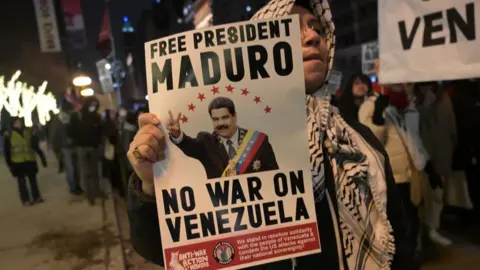
On Monday morning, a handcuffed, prison-uniform-wearing Nicholas Maduro stepped off a military helicopter in New York City, surrounded by federal marshals.
The leader of Venezuela had remained in a infamous federal detention center in Brooklyn, prior to authorities moved him to a Manhattan courthouse to answer to indictments.
The top prosecutor has stated Maduro was taken to the US to "answer for his alleged crimes".
But legal scholars challenge the legality of the administration's maneuver, and contend the US may have infringed upon global treaties concerning the armed incursion. Domestically, however, the US's actions enter a juridical ambiguity that may nevertheless lead to Maduro being tried, regardless of the circumstances that led to his presence.
The US insists its actions were permissible under statute. The government has alleged Maduro of "narco-terrorism" and abetting the movement of "massive quantities" of narcotics to the US.
"Every officer participating acted with utmost professionalism, decisively, and in complete adherence to US law and established protocols," the Attorney General said in a official communication.
Maduro has long denied US accusations that he manages an narco-trafficking scheme, and in the courtroom in New York on Monday he stated his plea of not guilty.
International Law and Enforcement Concerns
While the accusations are focused on drugs, the US legal case of Maduro comes after years of censure of his leadership of Venezuela from the United Nations and allies.
In 2020, UN investigators said Maduro's government had perpetrated "serious breaches" constituting international crimes - and that the president and other high-ranking members were implicated. The US and some of its partners have also alleged Maduro of rigging elections, and refused to acknowledge him as the rightful leader.
Maduro's claimed ties with narco-trafficking organizations are the focus of this indictment, yet the US methods in placing him in front of a US judge to respond to these allegations are also being examined.
Conducting a covert action in Venezuela and spiriting Maduro out of the country in a clandestine nighttime raid was "completely illegal under global statutes," said a expert at a law school.
Experts pointed to a host of issues presented by the US mission.
The UN Charter forbids members from threatening or using force against other countries. It allows for "self-defense against an imminent armed attack" but that risk must be immediate, analysts said. The other provision occurs when the UN Security Council sanctions such an action, which the US lacked before it took action in Venezuela.
International law would consider the drug-trafficking offences the US accuses against Maduro to be a law enforcement matter, experts say, not a armed aggression that might permit one country to take covert force against another.
In official remarks, the administration has framed the operation as, in the words of the top diplomat, "essentially a criminal apprehension", rather than an hostile military campaign.
Precedent and Domestic Jurisdictional Questions
Maduro has been formally charged on illicit narcotics allegations in the US since 2020; the federal prosecutors has now issued a revised - or revised - indictment against the South American president. The administration essentially says it is now executing it.
"The mission was conducted to facilitate an active legal case tied to large-scale illicit drug trade and connected charges that have fuelled violence, upended the area, and been a direct cause of the opioid epidemic causing fatalities in the US," the Attorney General said in her statement.
But since the mission, several legal experts have said the US violated treaty obligations by extracting Maduro out of Venezuela unilaterally.
"A country cannot invade another independent state and apprehend citizens," said an expert on international criminal law. "If the US wants to apprehend someone in another country, the correct procedure to do that is a formal request."
Regardless of whether an individual faces indictment in America, "America has no legal standing to operate internationally executing an detention order in the territory of other ," she said.
Maduro's lawyers in the Manhattan courtroom on Monday said they would challenge the lawfulness of the US mission which brought him from Caracas to New York.
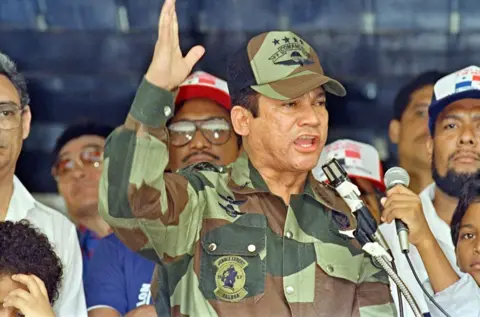
There's also a long-running legal debate about whether heads of state must adhere to the UN Charter. The US Constitution considers international agreements the country ratifies to be the "supreme law of the land".
But there's a well-known case of a presidential administration contending it did not have to comply with the charter.
In 1989, the Bush White House removed Panama's military leader Manuel Noriega and took him to the US to face narco-trafficking indictments.
An restricted DOJ document from the time argued that the president had the executive right to order the FBI to apprehend individuals who flouted US law, "even if those actions violate customary international law" - including the UN Charter.
The author of that opinion, William Barr, became the US AG and issued the initial 2020 accusation against Maduro.
However, the document's logic later came under questioning from legal scholars. US courts have not directly ruled on the question.
Domestic War Powers and Jurisdiction
In the US, the question of whether this action transgressed any US statutes is multifaceted.
The US Constitution gives Congress the prerogative to commence hostilities, but puts the president in charge of the military.
A War Powers Resolution called the War Powers Resolution establishes restrictions on the president's authority to use the military. It requires the president to notify Congress before deploying US troops overseas "whenever possible," and inform Congress within 48 hours of deploying forces.
The administration did not provide Congress a advance notice before the mission in Venezuela "because it endangers the mission," a cabinet member said.
However, several {presidents|commanders

